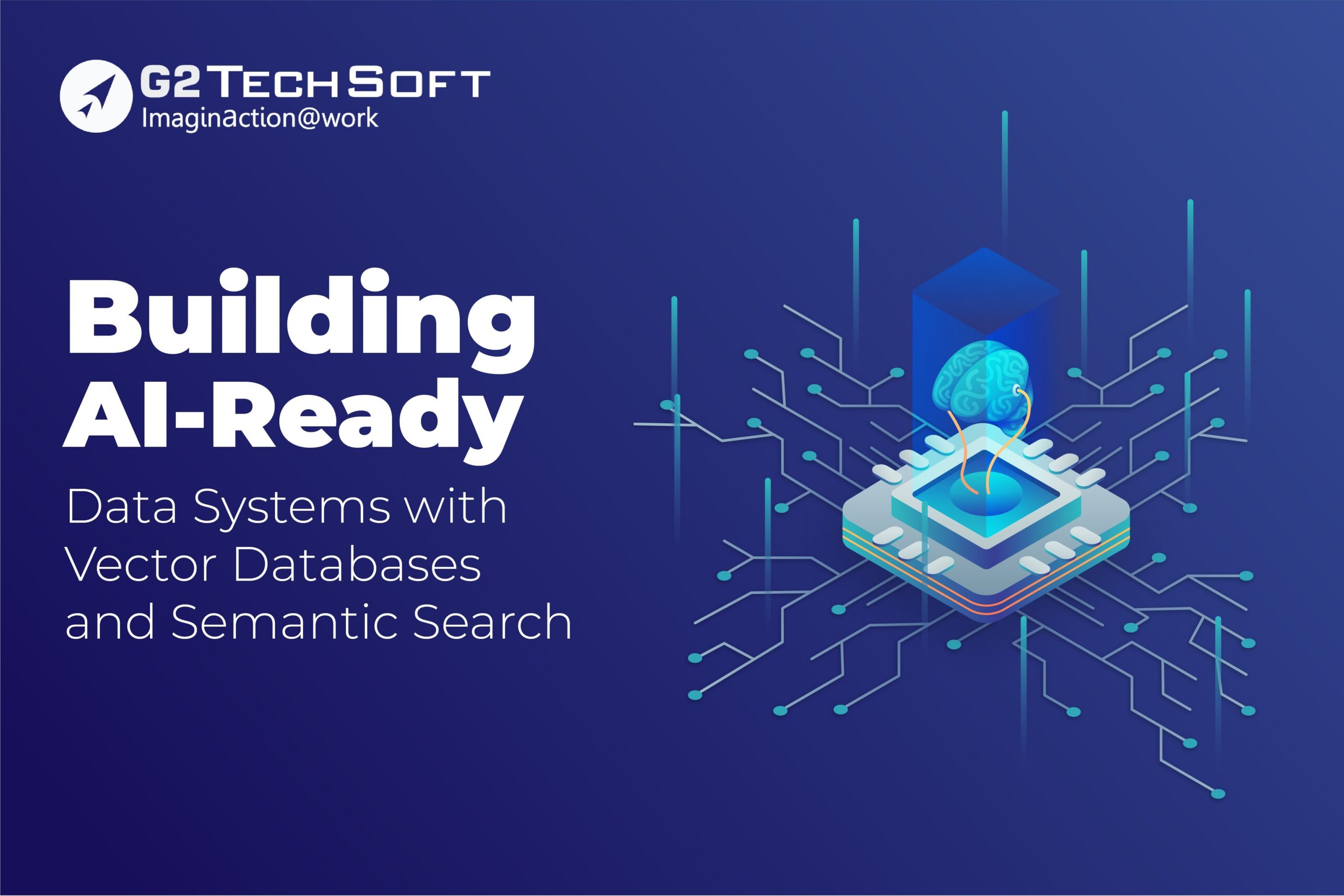
Building AI-ready Data Systems with Vector Databases and Semantic Search
Introduction: Why Traditional Data Systems are not Enough for AI
The rise of Artificial Intelligence has dramatically increased the volume of unstructured data generated by enterprises, including documents, images, conversations, and multimedia content. Traditional databases, built for structured records and exact-match queries, struggle to understand context and meaning within this data.
Modern AI applications such as chatbots, recommendation engines, and large language models require intelligent, context-aware retrieval systems. This has led to the growing adoption of AI-ready data systems powered by vector databases and semantic search.
As part of evolving Digital Transformation Solutions, enterprises are investing in modern AI data architecture to support scalable, intelligent, and real-time AI applications.
What Makes a Data System “AI-Ready”?
An AI-ready data system is designed to handle both structured and unstructured data while enabling real-time, context-aware retrieval. Unlike traditional systems, it supports semantic understanding, scalable processing, and seamless integration with AI and machine learning models.
Modern enterprise AI data platforms must also provide fast data access, intelligent search capabilities, and the flexibility to support evolving AI applications and workloads.
Understanding Vector Databases
What are Vector Databases?
Vector databases are specialized databases designed to store and manage vector embeddings. In AI systems, data such as text, images, audio, and videos are converted into numerical representations called embeddings.
These embeddings capture semantic meaning and contextual relationships between data points. Instead of retrieving results based on exact keywords, vector databases enable similarity-based searches that identify related information based on meaning.
This capability makes vector search databases essential for modern AI applications that require intelligent and context-aware retrieval.
How Vector Databases Work
Vector databases operate by converting data into vector representations using embedding models. These models analyze the underlying meaning and relationships within data before transforming it into high-dimensional numerical vectors.
Once generated, the vectors are stored and indexed within the database for efficient similarity search. When a query is submitted, the system compares vector proximity to identify semantically related results.
Unlike traditional search systems, which rely on exact matches, vector databases retrieve information based on conceptual closeness. This allows AI systems to understand user intent and provide more relevant responses.
The use of embeddings in AI significantly enhances the quality of search and recommendation systems by enabling machines to interpret meaning rather than syntax alone.
Popular Use Cases
Vector databases are becoming increasingly important across multiple industries and AI applications.
AI chatbots and virtual assistants use vector search to retrieve relevant contextual information during conversations. Recommendation engines leverage vector similarity to deliver personalized product and content suggestions.
Image and video search systems use embeddings to identify visually similar content without relying on manual tagging. Enterprise document retrieval systems also utilize vector databases to improve search accuracy across large knowledge repositories.
As AI adoption expands, vector databases are becoming central components of scalable and intelligent AI-ready data systems.
What is Semantic Search?
Definition and Core Concept
Semantic search is an advanced search methodology that focuses on understanding intent, context, and meaning rather than matching exact keywords.
Traditional search engines often fail when users phrase queries differently from stored content. Semantic search overcomes this limitation by interpreting the conceptual meaning behind queries and retrieving contextually relevant information.
This approach dramatically improves search relevance and user experience, particularly in AI-driven applications.
Semantic Search vs Keyword Search
| Factor | Keyword Search | Semantic Search |
| Matching | Exact words | Meaning-based |
| Accuracy | Lower | Higher |
| Context Awareness | No | Yes |
| User Experience | Basic | Intelligent |
The benefits of semantic search in AI become increasingly valuable as enterprises handle larger and more complex datasets.
Why Vector Databases and Semantic Search Work Together
Vector databases and semantic search are highly complementary technologies. Semantic search depends on embeddings to understand contextual meaning, while vector databases provide the infrastructure required to store and retrieve those embeddings efficiently.
Together, these technologies enable context-aware retrieval systems capable of supporting advanced AI applications. This combination is particularly important for Retrieval-Augmented Generation (RAG), where AI models retrieve relevant external information before generating responses.
In modern AI systems, semantic search improves the relevance and accuracy of AI-generated outputs by supplying contextually appropriate data in real time.
This integration forms the technological foundation for intelligent enterprise search, AI copilots, recommendation systems, and advanced conversational AI platforms.
Architecture of AI-Ready Data Systems
Data Ingestion Layer
The ingestion layer collects data from multiple enterprise sources, including structured databases, documents, APIs, customer interactions, and multimedia platforms.
This layer ensures that information flows continuously into the AI ecosystem for processing and analysis.
Embedding Layer
The embedding layer converts incoming data into vector representations using machine learning models.
This transformation enables semantic understanding and similarity-based retrieval across datasets.
Vector Storage Layer
The vector storage layer manages embeddings within specialized vector databases.
Efficient indexing and storage mechanisms enable rapid vector search performance, even across large-scale datasets.
Retrieval Layer (Semantic Search)
The retrieval layer processes user queries and identifies relevant results based on contextual meaning rather than keyword matching.
This layer plays a critical role in enhancing AI accuracy and user experience.
AI Application Layer
The final layer consists of AI-powered applications such as chatbots, enterprise copilots, recommendation systems, analytics platforms, and intelligent assistants.
These applications rely on the underlying architecture to deliver intelligent and context-aware functionality.
Key Benefits of AI-Ready Data Systems
AI-ready data systems provide several important advantages for enterprises adopting AI technologies.
One of the most significant benefits is faster and more accurate information retrieval. Semantic search enables users to access contextually relevant results more efficiently than traditional keyword-based systems.
These systems also improve AI model performance by supplying high-quality contextual data during inference and training processes.
Another major advantage is enhanced customer experience. AI applications powered by vector databases can deliver more personalized recommendations, intelligent support, and conversational interactions.
Organizations can also unlock insights from previously underutilized unstructured data sources, including documents, audio, and visual content.
Finally, modern AI data infrastructure for enterprises provides scalability and flexibility, ensuring long-term readiness for future AI innovations.
Real-World Use Cases
Customer Support AI
Context-aware chatbots retrieve relevant knowledge articles and customer history to provide intelligent responses and personalized assistance.
Enterprise Search
Semantic search improves enterprise document retrieval by enabling employees to locate relevant information quickly across large repositories.
E-commerce Recommendations
Recommendation systems analyze behavioral and product embeddings to generate highly personalized shopping experiences.
Healthcare Knowledge Search
Healthcare organizations use semantic retrieval systems to access medical research, patient records, and diagnostic information more efficiently.
Finance and Fraud Detection
Financial institutions leverage vector similarity analysis to identify unusual transaction patterns and improve fraud detection capabilities.
Challenges in Implementing Vector Databases and Semantic Search
Data Quality and Preparation
High-quality data is essential for effective semantic retrieval. Poorly structured or inconsistent data reduces embedding accuracy and system performance.
Infrastructure Complexity
Implementing vector databases requires modernized infrastructure capable of handling large-scale indexing, storage, and AI integration.
Organizations transitioning from traditional systems may face architectural challenges during deployment.
Cost and Scalability
Managing large vector datasets can be resource-intensive. Enterprises must carefully balance infrastructure investment with performance requirements.
Model Selection
Choosing the right embedding models is critical for achieving accurate retrieval results. Different models perform better depending on the data type and use case.
Best Practices for Building AI-Ready Data Systems
Organizations should begin with clearly defined AI use cases to align infrastructure investments with business objectives.
Investing in high-quality data pipelines ensures consistency, reliability, and improved AI performance. Enterprises should also select scalable vector database solutions capable of supporting future growth.
Implementing hybrid search strategies that combine keyword and semantic retrieval often produces the best results. Continuous monitoring and optimization are equally important for maintaining system performance and relevance over time.
Following these strategies helps organizations understand how to build AI-ready data systems effectively and sustainably.
Future Trends in AI Data Infrastructure
The future of AI data infrastructure is increasingly shaped by Retrieval-Augmented Generation (RAG), which combines LLMs with real-time contextual retrieval systems.
Multimodal embeddings are also becoming more important, enabling AI systems to process text, images, audio, and video simultaneously.
Major cloud and enterprise platforms are integrating vector databases directly into their ecosystems, accelerating mainstream adoption.
As AI applications become more sophisticated, organizations are moving toward AI-native architectures specifically designed to support intelligent, context-aware systems at scale.
The debate around vector databases vs traditional databases will continue evolving as enterprises prioritize semantic understanding and real-time intelligence.
Conclusion: The Foundation of Next-Generation AI Systems
Vector databases and semantic search are no longer emerging technologies they are becoming foundational components of modern AI ecosystems.
As enterprises continue adopting Artificial Intelligence, traditional data systems alone will not be sufficient to support intelligent, context-aware applications. Organizations need scalable, semantic-driven architectures capable of handling complex and unstructured information efficiently.
By investing in modern AI-ready data systems, businesses can improve search accuracy, enhance AI performance, and unlock deeper insights from enterprise data.
In the evolving digital landscape, organizations that modernize their AI data infrastructure today will be better positioned to build scalable, intelligent, and future-ready AI applications tomorrow.