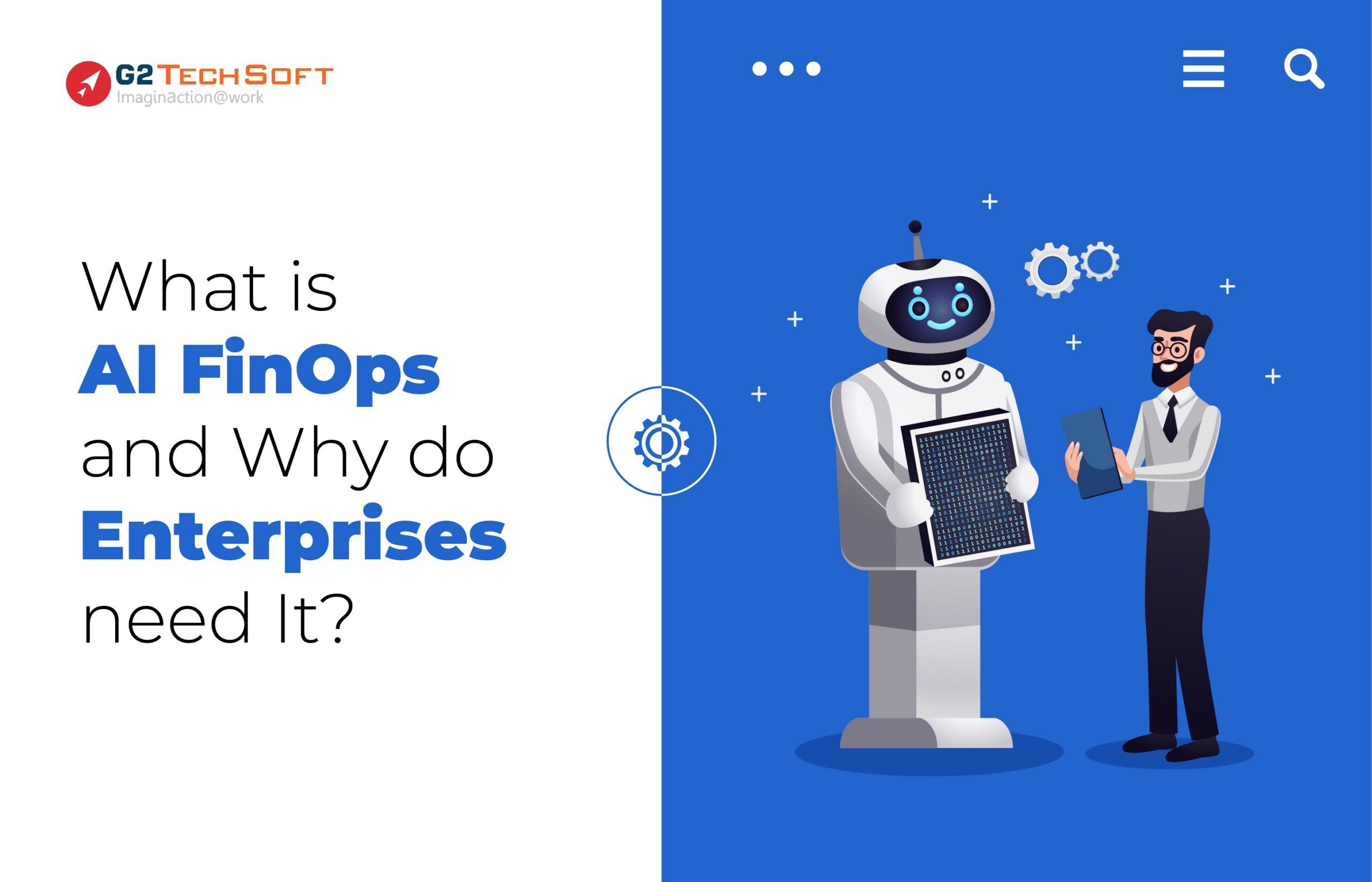
What is AI FinOps and Why do Enterprises need it
Introduction: The Hidden Cost of Scaling AI
Enterprises across every industry are adopting artificial intelligence at a remarkable pace, embedding models into products, workflows, and customer experiences faster than ever before. But this rapid adoption comes with a quieter, less visible consequence: spending on compute, data storage, APIs, and models is climbing just as quickly, often without anyone in the organization having a clear picture of where the money is actually going.
Unlike traditional software costs, AI expenses are scattered across many moving parts, training runs, inference calls, storage layers, and third-party platforms, making them notoriously difficult to trace back to a single owner or business outcome.
A single large language model deployment, for instance, might involve compute costs from fine-tuning, ongoing token-based inference charges, data storage fees, and licensing costs from multiple vendors, all billed separately and rarely reviewed together.
This lack of visibility into AI-related costs is becoming one of the biggest hidden risks of enterprise AI adoption. In response, a new discipline has emerged to bring financial clarity to this chaos: AI FinOps, a practice built specifically to help organizations manage and optimize their growing AI investments as part of a broader digital transformation solutions strategy centered on artificial intelligence.
What is AI FinOps?
AI FinOps can be defined as the application of Financial Operations, or FinOps, principles specifically to AI workloads. It combines finance, engineering, and operations into a single collaborative practice, rather than treating cost management as a separate function handled only after the fact. The focus of AI FinOps rests on three pillars: cost visibility, optimization, and accountability.
Where traditional FinOps concentrates primarily on cloud infrastructure spending, AI FinOps extends that same discipline into AI-specific cost categories, addressing the unique and often unpredictable ways that AI systems consume resources. It is, in essence, a natural evolution of financial governance for an era where compute-intensive AI workloads have become central to business operations, requiring a level of cross-functional coordination that traditional cost management practices were never built to handle.
Why Traditional FinOps is not Enough for AI
AI workloads behave very differently from conventional cloud infrastructure, and this difference is precisely why traditional FinOps frameworks fall short. AI workloads are dynamic and unpredictable, with costs shifting rapidly depending on usage patterns, experimentation, and scale. These costs are typically driven by:
- Model training (GPU/TPU usage)
- Inference (API calls, tokens)
- Data processing and storage
Because these cost drivers can spike suddenly and vary enormously from one project to the next, there is a clear need for real-time cost tracking and optimization, something traditional, infrastructure-centric FinOps practices were never designed to provide.
Key Components of AI FinOps
A mature AI FinOps practice is generally built around five interconnected components.
Cost Visibility
Cost visibility involves tracking AI spending across teams and projects, giving organizations a clear understanding of where costs originate and what is actually driving them.
Usage Optimization
Usage optimization focuses on optimizing compute resources and model usage while actively reducing unnecessary workloads that quietly inflate spending without adding proportional value.
Budgeting and Forecasting
Budgeting and forecasting involve predicting AI costs based on usage patterns, allowing organizations to align budgets with broader business goals rather than reacting to costs after they have already been incurred.
Governance and Accountability
Governance and accountability center on defining clear ownership of AI costs and establishing policies and controls that prevent spending from becoming fragmented across teams with no single point of responsibility.
Performance vs Cost Balance
Performance versus cost balance is about ensuring an optimal trade-off between accuracy and cost, recognizing that the most accurate model is not always the most financially sustainable choice for a given use case.
Key Drivers of AI Costs in Enterprises
Several factors contribute to increasing AI infrastructure cost across modern enterprises.
Model Training
Training advanced machine learning models requires significant computational power, particularly when using specialized hardware such as GPUs or TPUs. Training cycles may continue for days or weeks, making them one of the largest contributors to AI expenditure.
Inference at Scale
Once deployed, AI models continue generating costs through inference. Every API request, token processed, or prediction generated contributes to ongoing operational expenses.
Data Storage and Processing
AI depends on very huge volumes of both unstructured and structured data. Storing, processing, cleaning, and transferring this data creates substantial infrastructure costs that continue throughout the AI lifecycle.
Experimentation and Iteration
Developing AI models involves repeated experimentation. Teams often train multiple versions, test different parameters, and compare model performance before deployment. Each iteration consumes additional computing resources.
Third-Party AI Platforms
Many organizations rely on external AI providers for foundation models, APIs, managed machine learning platforms, or cloud services. These services offer flexibility but also introduce recurring operational costs that require careful monitoring.
Why Enterprises need AI FinOps
Preventing Cost Overruns
AI FinOps helps organizations avoid unexpected spikes in AI spending, which can otherwise emerge suddenly from a single unmonitored training run or a surge in inference volume.
Improving ROI On AI Investments
By aligning AI initiatives with business value, AI FinOps ensures that spending translates into measurable outcomes rather than open-ended experimentation.
Enabling Scalable AI Adoption
AI FinOps allows organizations to sustain growth without uncontrolled costs, making it possible to scale AI initiatives confidently rather than pulling back out of financial uncertainty.
Enhancing Decision-Making
With data-driven financial insights in hand, leaders can make more informed decisions about where to invest further and where to scale back.
Driving Accountability Across Teams
AI FinOps encourages shared responsibility between engineering and finance, breaking down the silos that often allow AI costs to spiral unnoticed.
Benefits of AI FinOps
Organizations that adopt AI FinOps typically experience several tangible benefits:
- Better cost control and transparency
- Optimized resource utilization
- Faster innovation with controlled spending
- Improved collaboration between teams
- Increased financial predictability
Real-World Use Cases
The practical relevance of AI FinOps becomes clear across a range of common enterprise scenarios:
- Optimizing LLM API usage costs
- Managing GPU expenses for training models
- Reducing data pipeline inefficiencies
- Monitoring AI experiment costs
Challenges in Implementing AI FinOps
Despite its clear value, implementing AI FinOps is not without obstacles.
Complex Cost Structures
AI spending often involves multiple layers of cost that are difficult to disentangle, spanning infrastructure, licensing, and third-party services simultaneously.
Lack of Visibility Tools
Many organizations still face limited tools for AI-specific cost tracking, forcing teams to rely on manual processes or fragmented reporting.
Cross-Team Collaboration
Aligning finance, engineering, and operations around a shared understanding of AI costs remains a persistent organizational challenge.
Rapidly Evolving AI Landscape
Constant changes in tools and pricing models make it difficult for cost frameworks to stay current, requiring ongoing adaptation rather than a one-time setup.
Best Practices For AI FinOps
Enterprises that succeed with AI FinOps tend to follow a consistent set of principles:
- Implement real-time cost monitoring
- Set budgets and alerts for AI usage
- Optimize model selection and usage
- Use cost-efficient infrastructure (spot instances, scaling)
- Establish governance policies
- Continuously measure ROI of AI initiatives
Together, these practices form the foundation of effective AI cost optimization best practices across the organization.
Tools and Technologies Supporting AI FinOps
A growing ecosystem of tools now supports the practice of FinOps for AI, including:
- Cloud cost management platforms
- AI monitoring and observability tools
- MLOps platforms with cost tracking
- Custom dashboards for AI cost analytics
The right combination of tools depends on an organization’s scale and the complexity of its AI footprint, but the underlying goal remains the same: turning scattered cost data into a single, actionable view of enterprise AI spending.
As adoption grows, many enterprises are also integrating these tools directly into their existing engineering workflows, so that cost data becomes as visible and routine as performance metrics rather than something reviewed only during quarterly budget cycles.
Future Trends in AI FinOps
Looking ahead, AI FinOps is expected to evolve significantly:
- AI-powered cost optimization (self-optimizing systems)
- Integration with MLOps and AIOps
- Increased focus on sustainable AI (Green AI)
- Standardization of AI cost metrics
- FinOps evolving into AI-driven financial intelligence
As these trends mature, the discipline is likely to shift from reactive cost tracking toward proactive, intelligent financial management that anticipates cost issues before they occur.
Conclusion: Making AI Financially Sustainable
AI FinOps is becoming essential as enterprises scale AI adoption, offering a structured way to bring financial discipline to what has historically been an opaque area of spending. Understanding what AI FinOps is in enterprises and how to manage AI costs effectively is no longer a niche concern reserved for finance teams; it is a shared responsibility that touches engineering, operations, and leadership alike.
By implementing strong financial governance, guided by the insight of top artificial intelligence experts and grounded in proven benefits of AI FinOps strategy, organizations can ensure that AI initiatives are not only innovative, but also cost-effective, scalable, and sustainable for the long term.
In an environment where cloud AI cost optimization and MLOps cost control are becoming board-level concerns, AI FinOps stands as the foundation on which financially responsible AI adoption is built.